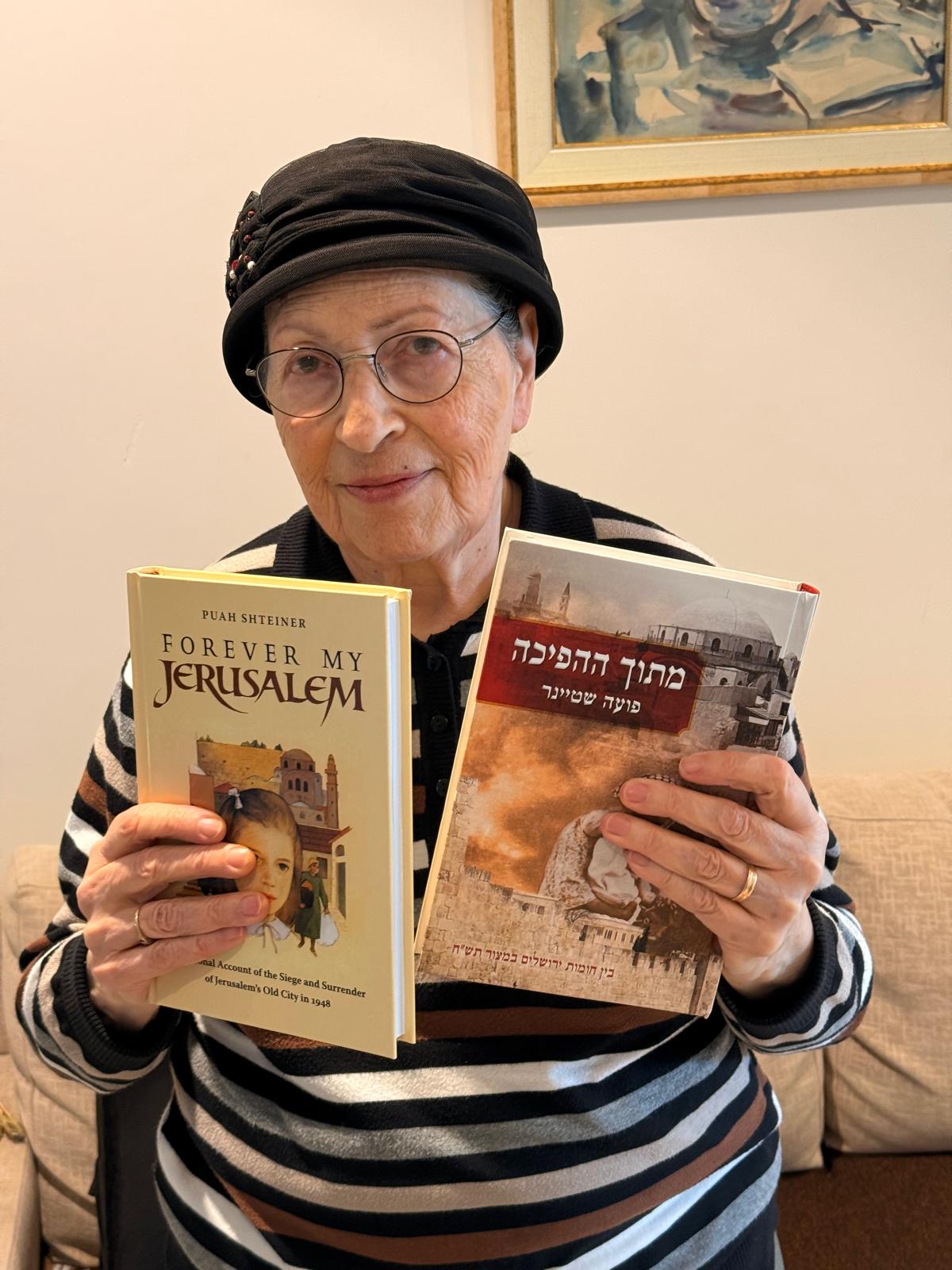

Puah Steiner’s childhood story – living with her family in the Old City when it was overrun in 1948 and escaping with their lives – is documented in her best-selling book “Forever My Jerusalem”. Today, she and her husband Rabbi Haim are living in Beit Tovei Ha’ir. What happened in between?
The English edition of “Forever My Jerusalem” ends with Puah and Haim returning to visit the Jewish Quarter in 1967. The Hebrew edition was updated later to describe how they returned to live there in 1977, and attended the dedication of the rebuilt Hurva Synagogue in 2010. Living in the Jewish Quarter and bringing up six children, Puah used to speak to visiting tour groups and tell her dramatic story. She eventually found time to write her book during her seventh pregnancy, and it was published as her eighth child was born.
Puah has written two more books – a biography of her father Rav Shlomo Min Hahar zt”l, who was a prominent Rabbi in Jerusalem’s Bayit Vegan neighborhood, and a fictional book in Hebrew describing the impact of dementia and old age on family relationships. She is currently working on a new book about the wave of Aliyah after 1948.
Puah’s life literally encompasses the entire story of the Jewish State. Reflecting on the events of 2026, Puah is sanguine; she has lived through worse wars.
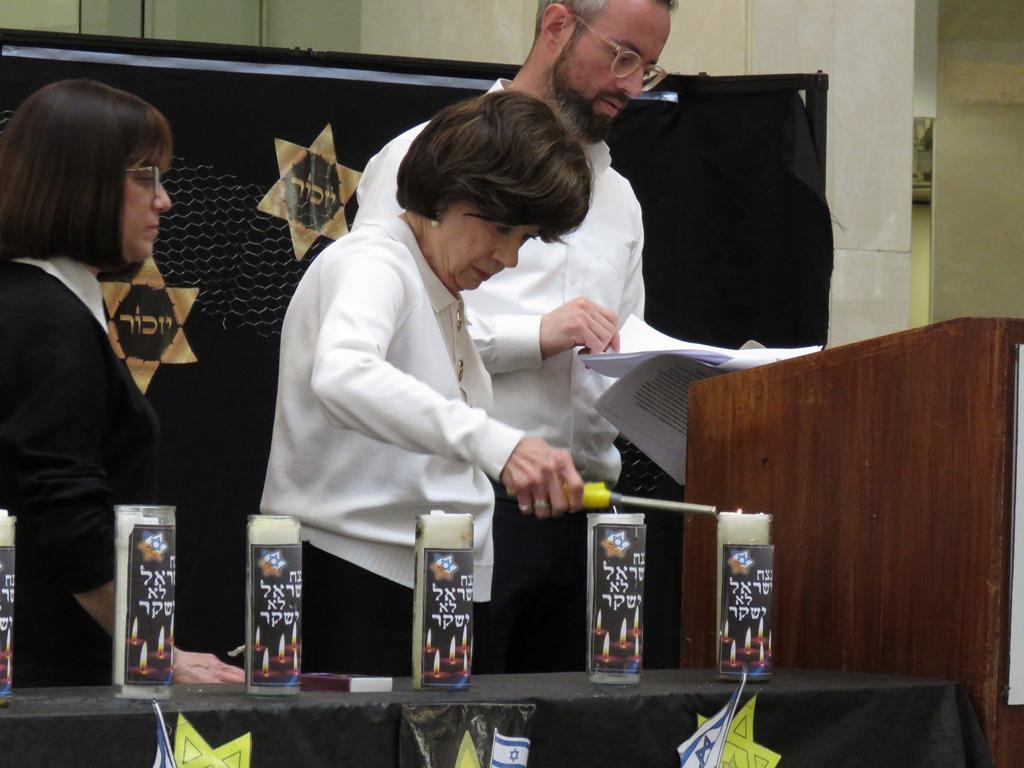
“We were not surprised by the barbarity of the attacks on October 7, 2023”, she says. “We have lived through the best of times and the worst of times. In 1948, Arabs with knives came running through the Jewish Quarter to kill us, and we had nowhere to run. The walls held us in, and we cowered in a basement and davened for salvation. Miraculously the Arab attackers disappeared, and we really expected Mashiach to walk into the Old City at that moment, but it didn’t happen and we were evacuated to live in Katamon.”
During the Six Day War in 1967, she and her sister hid with their parents in another basement while her brother-in-law was fighting in the IDF and bombs were falling on Jerusalem. They saw smoke rising from the Old City and recited Hallel when it was recaptured. The Steiners were excited to move back to the Holy City, living close to the Kotel and witnessing the rebuilding and repopulation of the Jewish Quarter. Puah and her daughters used to daven on the High Holidays in Yeshivat HaKotel overlooking Har HaBayit. Today, two of her sons serve in the IDF Rabbinate, and she davens for her grandsons and their comrades who are defending Israel’s borders.
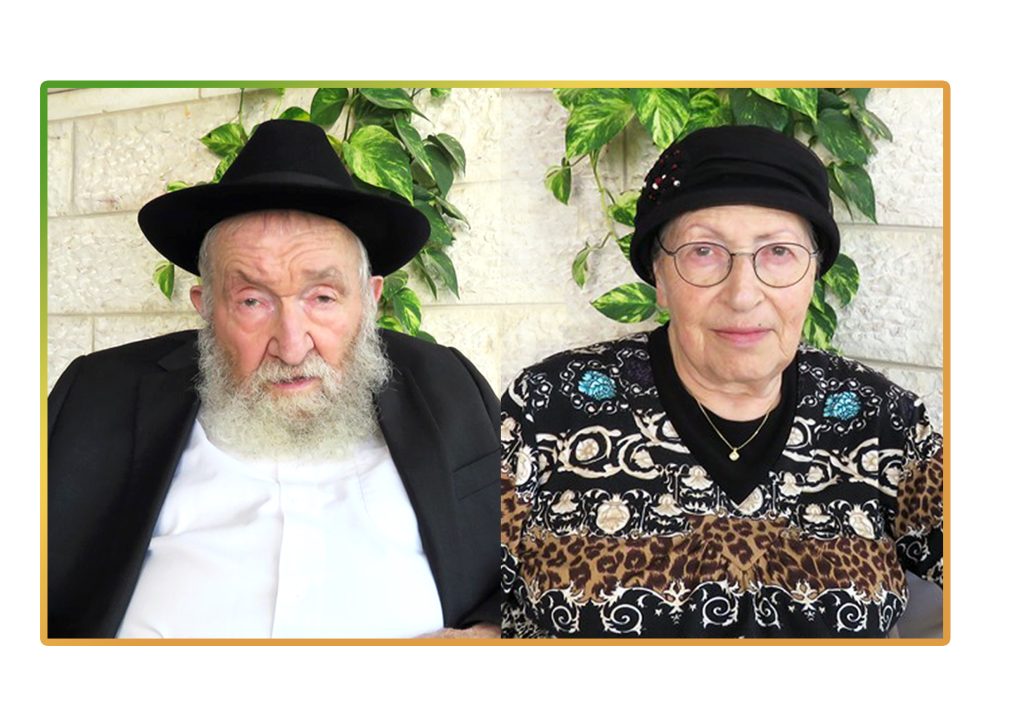
So, why did Puah and Haim decide to leave the Old City and move to Beit Tovei Ha’ir in 2025?
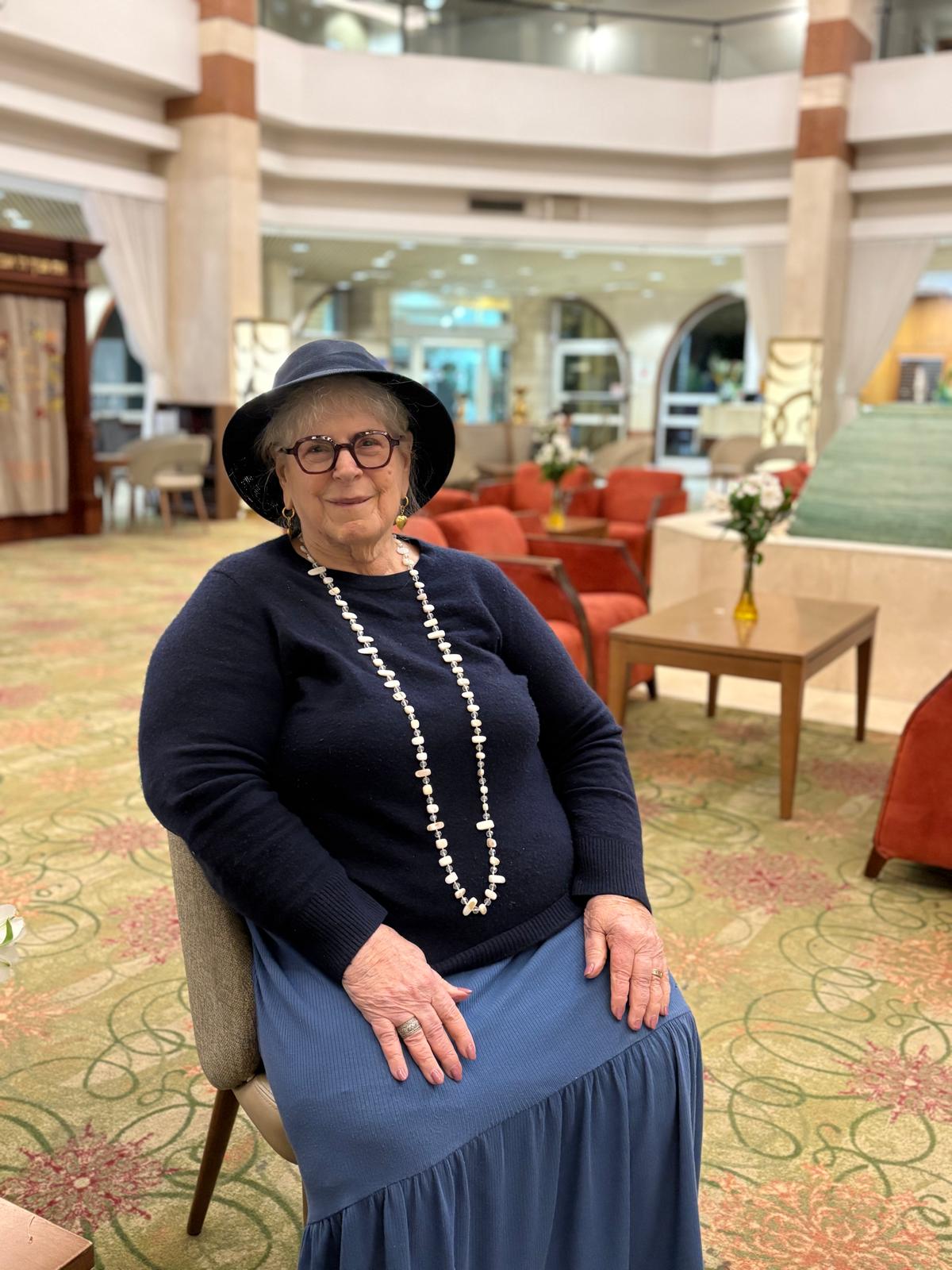
“We were finding it difficult to navigate the steps and narrow streets. Getting my husband to and from shul became increasingly dangerous, and the sirens last summer were too much for us to cope with. We moved into this beautiful apartment with a balcony. My husband is happy to daven in the Enrichment Center and attend their shiurim and special activities. There is a strong support network among the residents, together with professional support from the Beit Tovei staff, so I don’t have to worry about him. Our central location makes it easier for me to go shopping, to visit family members, and even to travel to my beloved Kotel.” Here, I can also swim every day, attend fascinating shiurim, and work on my writing.
Reflecting on her eventful life to date, Puah says: “I feel blessed that Hashem continues to protect Am Yisrael. Rav Kook wrote that the process of geulah (redemption) involves backward steps, but they should empower us to rush forward. My great-grandparents came from Germany to Jerusalem 190 years ago, despite concerns that Eretz Yisrael was a very challenging place to raise a family. My other grandfather learned in a Yeshiva in the Old City, and my father was the Rav of the Bait Vegan neighborhood in Yerushalayim for almost 40 years. Today, my grandchildren – eighth generation Israelis – are learning Torah and fighting for the Jewish State. We have so much to be grateful for.”